If you desire a safe, reliable home, start with the heart of the electrical system: the electrical panel. It is the traffic controller for every single circuit in the house, silently balancing loads, tripping when a fault takes place, and offering you a single point of control. When it is set up correctly and maintained, you hardly see it. When it is undersized, outdated, or mistreated, it can create dangers that don't constantly announce themselves until a breaker runs hot or a wire insulation smells faintly of warm plastic.
I have opened panels that were immaculate, and others that appeared like a nest of light cord and wishful thinking. The difference generally comes down to basic safety practices, a little awareness, and regard for what lives inside that gray metal door. The good news is, most house owners can spot red flags and embrace safer habits without touching a live conductor.
Start with place, access, and labeling
An electrical panel that is difficult to reach or unlabeled is more hazardous than it requires to be. Emergency situations are not the time to go hunting for a breaker behind storage boxes.
Panels ought to have clear working area in front of them. Code calls for a space about the size of a phone cubicle, 30 inches broad and 36 inches deep, with 6 feet 6 inches of headroom. In useful terms, if you can not open the door totally, go back without bumping into something, and read labels without a flashlight balanced on your shoulder, you need to reorganize.
I have seen labels ranging from careful spreadsheets to scribbles like "bed room?" or "do not touch." Take an evening to map your circuits. Plug in a light or utilize a circuit tracer and turn one breaker at a time. Change faded adhesive notes with a tidy legend on the panel door. Usage plain, descriptive language: "Kitchen counter GFCI outlets," "Garage door opener," "Primary bed room outlets." Prevent jokes, color codes without a key, or mystical cautions. If a breaker dependably journeys when you turn it back on, note that as well and stop turning it.
A dry, temperate location matters. Basements are common panel areas, but if your panel is beside a clothes dryer vent clouding the area with lint, or near a dripping foundation wall, relocate what you can. Wetness and conductive dust shorten the life of breakers and bus bars.
Understand what your panel is doing for you
A typical domestic electrical panel takes the energy's service and divides it into branch circuits that safeguard electrical wiring and devices around your house. Standard breakers respond to overloads and short circuits. Ground fault circuit interrupters secure people near water by tripping on leak current that might be flowing through your body. Arc fault circuit interrupters recognize the signature of arcs from harmed cables or loose connections and closed down before those arcs start a fire.
If your panel dates from the 1960s or earlier, it might not support modern-day protective gadgets well. Some older panels can decline mix AFCI or dual-function breakers. You can typically retrofit security using GFCI outlets, but that leaves spaces. Your panel must support the security your home needs, not the other way around.
Homeowners sometimes see a breaker as an annoyance when it journeys repeatedly. It is really doing its job. A breaker that never ever journeys in a home loaded with electrical space heating systems and hair clothes dryers may fret me more than one that journeys since a toaster and microwave share a 15 amp circuit.
Watch for brand name and age red flags
Not all panels are created equal. Certain brands and models have actually known flaws. Many professionals flag Federal Pacific Electric panels with Stab-Lok breakers, which have a history of not tripping dependably and of loose breaker fitment. Zinsco and some Sylvania-branded variations from mid-century builds also reveal uncomfortable failure modes, consisting of burned bus bars hidden behind breakers that still look intact on the front. I have eliminated Stab-Lok breakers that appeared fine, only to find heat-scorched copper behind them.
If your panel is older than 40 years, it is worthy of a careful examination even if it is not on a problem list. Heat cycles, humidity, and dust accumulate. Breakers can grow stiff; springs compromise. Insulation dries and fractures. If you can not validate your panel's brand and model, take clear pictures and ask a certified electrician to encourage. This is not about brand panic, it is about guaranteeing your protective gadgets will trip when needed.
Respect the primary breaker and service conductors
The main breaker shuts off power to the branch circuits, however the service conductors feeding that breaker remain live unless the utility detaches power upstream. That suggests even with the primary off, there are parts of the panel that are not safe to touch. I say this to dissuade adventurous DIY cleaning with a tooth brush. Panel interiors can bring energy that will not forgive a dropped screwdriver or a ring that brushes a live lug.
Homeowners should keep the door closed, examine with eyes and nose, and just eliminate a deadfront cover if they totally understand what is exposed. If you choose to open a panel to tighten a loose breaker, it is easy to slip. The majority of panels will not bite if you do not touch the wrong thing, however that is a bad safety strategy. When in doubt, stop at the door.
The quiet signals of overheating
Electrical issues typically whisper before they yell. Utilize your senses. A panel that feels warm to the touch when no heavy loads are running should have investigation. A warmed panel throughout peak use is more typical, particularly in summertime when the air conditioning unit is on. However constant heat, hotter than your hand is comfy with, is not.
Odors are another clue. That sweet, acrid whiff of warmed plastic is a caution. So is a faint sizzling sound that reoccurs. I as soon as traced an erratic odor to a breaker with a poor stab connection, arcing gently at the bus bar. The breaker had not tripped yet since the heat was at the contact, not from an overload.
Discoloration around a breaker or on the metal cover near a particular slot tells a story. Labels curling from heat, or a breakable, browned conductor insulation under a set screw, usually indicate a bad connection instead of a basic overload. An electrical contractor will pull that breaker, examine the bus, and in some cases move the circuit to a fresh position if the bus is damaged.
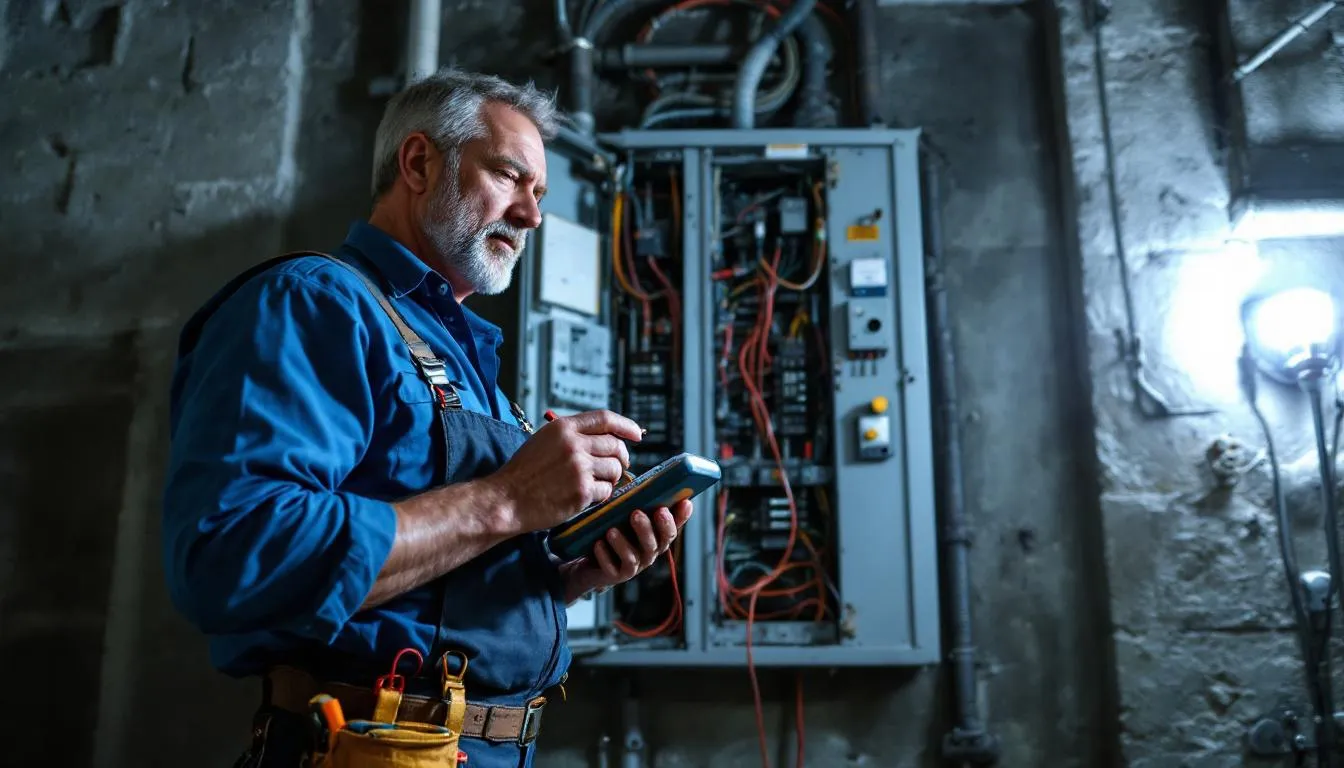
Do not double up conductors where they do not belong
A typical defect is two conductors under one breaker lug, commonly called double tapping. Some breakers are noted for two conductors. Most are not. The problem is mechanical and electrical: one conductor can unwind gradually and lose securing force, triggering heat and arcing. If you see 2 copper or aluminum wires under a single screw without any noted twin style, prepare a correction.
The repair can be as simple as adding a noted pigtail to an appropriately sized wire connector and feeding one conductor to the breaker. In a crowded panel, a little subpanel or a breaker with authorized tandem slots might be the best course. I would rather include a six-circuit subpanel than stuff two circuits into a breaker that was not created for it.
Neutrals and grounds should have attention also. Each neutral should typically land under its own terminal on the neutral bar. Premises can share terminals in some panels, however just if the bar labeling allows it and wire sizes match the listing. Careless terminations multiply small dangers into genuine heat.
Aluminum wiring requires special care
If your home dates from the late 1960s into the 1970s, you may have aluminum branch-circuit circuitry. Aluminum expands and contracts more than copper and types oxides that are not as conductive. That does not imply aluminum is inherently unsafe, but it must be terminated properly.
Breakers and lugs must be rated AL/CU, and anti-oxidant substance applied where defined. The torque on those terminations matters. I have seen aluminum wires that felt secure to the touch but were under-torqued by half, showing darkening near the clamp. A torque screwdriver is not overkill here. If you are not equipped, this is a strong case for professional service.
Choose the best breaker for the job
Swapping a breaker is not practically matching amps. The type matters. Kitchens, bathrooms, laundry areas, garages, and outdoor outlets need GFCI defense. Numerous living areas now need AFCI or dual-function breakers. If a breaker is tripping on annoyance arcs from a treadmill or older vacuum, that can be frustrating, but do not defeat it by setting up a standard breaker to silence the trips. Address the underlying device or circuit.
Also, avoid oversizing to stop trips. Changing a 15 amp breaker with a 20 amp unit on the same 14 gauge wire is a fire threat. The breaker secures the wire. If the circuit trips under typical use, think about load management, a brand-new devoted circuit, or an upgrade of the conductors.
Keep the panel interior tidy, dry, and intact
Dust is not just undesirable. Great dust can absorb moisture and end up being a little conductive, causing tracking paths throughout insulating surface areas. In garages and workshops, overspray and sawdust drift into panels through missing out on knockouts. Those open knockouts likewise invite bugs, which enjoy warm cavities. I have actually vacuumed a panel that contained a wasp nest and spider webs extended throughout live parts. That was not a fun morning.
If your panel has missing out on knockouts, set up noted snap-in plugs. If you see rust, figure out where the wetness originates from. I have actually traced rust to roof leakages that ran along the service mast, and to condensation from uninsulated ductwork above the panel. Sealing and ventilation often do more for panel longevity than any cleaning.
Never paint the interior of a panel. Overspray on bus bars or breakers compromises thermal performance and can conceal heat tension. If someone hit the deadfront with a roller, tidy the edges where labels are, however leave the live parts alone.
Map your capacity and plan ahead
A full house of modern-day electronics, A/C, electric vehicle chargers, and induction cooktops asks more of the service than a home from the 1970s was built to deliver. If your primary panel is 100 amps and you are including a hot tub or a Level 2 EV battery charger, you are not just managing breakers, you are handling service load.
Load estimation is not uncertainty. Specialists utilize demand elements to show that not all loads run at when, however even with those presumptions, lots of older services come up short. I have actually seen house owners daisy chain subpanels off a 100 amp service until there was no space left, like adding power strips to an overworked outlet. If your main breaker trips on hot nights when the a/c and oven are both on, that is an indication your service may be undersized.
Upgrading to a 200 amp service often brings the panel as much as existing requirements for grounding and rise defense. It likewise provides you breaker area to keep circuits tidy. The expense differs commonly, affected by utility coordination, meter place, grounding electrode installation, and local licenses. Upgrades take planning, but the assurance is real.
Grounding and bonding are not optional
Many panel dangers conceal in imperfect grounding and bonding. The grounding electrode system gives lightning and fault existing a low resistance path to earth. The bond in between the neutral bar and the service enclosure is only enabled at one point, normally the main service detach. In subpanels, neutrals and grounds must be separated. I have discovered subpanels with the bonding screw set up, causing parallel neutral paths that energize metal avenue and boxes under fault conditions.
If you have a removed garage with a subpanel, the setup gets more nuanced. The present requirement is a devices grounding conductor run with the feeder and a separated neutral in the subpanel, with no different ground rod used as a substitute for that conductor. Old installs often split neutrals and grounds without a dedicated grounding conductor, counting on a ground rod at the separated building. That method can leave a neutral path through soil, which is not dependable. This is a point where a professional evaluation is worth the call.
Replace what is used, not just what fails
Breakers are mechanical devices. Springs fatigue, latches wear, thermal components change qualities. They are tested to journey within a range, and after years of service and heat, that vary drifts. If a breaker deal with is loose, does not lock crisply, or wobbles in the panel, replace it with the specific noted design. Do not blend brands or utilize "fits most" breakers. Even when a third-party breaker seems to clip into the bus, it may not make the right contact pressure or line up with the stab. Heat damage from poor fit shows up years later.
If a breaker has tripped many times, especially under short-circuit conditions, it has actually made retirement. Motors that stall, such as a struggling well pump or a bound heater blower, can slam a breaker hard. I once measured a breaker that passed present but failed to trip at 200 percent after a number of motor fault events. It looked ideal. Only screening revealed the problem.
Know the safe homeowner tasks
There is plenty you can do securely around an electrical panel without opening it up.
- Keep the area clear and dry, preserve an understandable circuit directory, and guarantee you can reach the panel quickly during the night with good lighting. Exercise breakers a number of times a year by changing them fully off then on, except for fragile equipment circuits. This helps keep contacts tidy and exposes sticky mechanisms. Use a plug-in tester to check GFCI-protected circuits and test GFCI/AFCI breakers with their test buttons regular monthly. If a gadget stops working to trip, schedule service. Note any repeating journeys and the conditions. A quick log helps your electrician diagnose. Inspect for rust, smells, or buzzing. If you see rust or heat indications, stop there and call a pro.
That short list covers the majority of the homeowner's share of panel care. Anything beyond that crosses into live equipment or torque-sensitive work that needs tools and training.
Avoid common misconceptions and risky shortcuts
A handful of bad concepts circulate in garages and online forums. Neutral is not an extra ground, and ground is not an extra neutral. They serve various functions. Bootleg grounds where a jumper bonds neutral to the ground screw in an outlet box produce shock hazards and fool testers into reading a safe ground where none exists.
Cheater merges existed for a factor in the era of screw-in fuse panels, however in a breaker panel, a device that defeats trip functions is not clever. Also, wedging a breaker handle to stop it from tripping resolves absolutely nothing. If a freezer keeps tripping the garage GFCI, discover the cause or replace the freezer. Modern GFCI gadgets are more resistant to nuisance trips than older versions, and moving the home appliance to a devoted circuit typically resolves the frustration.
Tandem breakers are another misconstrued item. Some panels are listed for tandem breakers in specific slots only. Those slots are typically marked on the label diagram. Filling every slot with tandems to double your circuits is not safe if the panel is not created for that configuration. Heat builds where the bus density is highest, and conductor fill ends up being chaotic.
Surge protection and lightning realities
Whole-home surge protective devices have actually matured and are now fairly priced compared to the value of modern electronics. Mounted at the electrical panel, they secure voltage spikes that originate from energy switching, distant lightning strikes, and large motor loads biking on and off. They are not magic. A direct strike will still overwhelm most gadgets, however a great SPD can keep a spike from taking out your refrigerator control board and HVAC inverter.
Look for a gadget noted for Type 1 or Type 2 setup, sized for your service, with a clear status indication. Change it when it shows defense has been diminished. Pair it with point-of-use protection for sensitive equipment, and keep your grounding electrode system in excellent shape, since SPDs rely on it to dispose energy safely.
The EV battery charger and heatpump era
Electrification is not abstract any longer. A Level 2 EV charger draws 16 to 48 amps for hours. A modern heatpump can be efficient however might still be a big constant load. Add induction cooking and a heat pump water heater, and your panel becomes a hectic place.
Plan these upgrades together. A load computation might reveal that a 200 amp service is the ideal base. Smart load management systems can assist prevent a service upgrade by shedding a hot water heater or delaying a car charge when the oven and dryer are on, but that is only safe when crafted correctly. I have actually set up load management that worked perfectly and seen DIY relays that stopped working in a way that left a circuit hot when it need to have been off. Pick listed, supported systems, and keep electrical wiring tidy and labeled so future you or a professional can service it.
When to call an expert immediately
Some scenarios call for speed, not dispute. If you smell burning insulation at the panel, see smoke, or feel the panel faceplate hot enough that you can not keep your repairing an electrical panel hand on it, call your utility and a certified electrician. If a breaker journeys back on and right away trips once again with a pop, leave it off and call. Water entry into the panel, whether from a roof leak or a flooded basement, means the panel requires drying, assessment, and typically replacement of affected components. Rust on live parts is not something you clean away and forget.
Repeated nuisance trips on GFCI or AFCI gadgets might be informing you about a circuitry fault, a deteriorated cable, or an appliance with insulation leakage. Do not swap gadgets blindly. File what you observe and let a pro test the circuit. A megohmmeter and a clamp meter tell a fuller story than guesswork.
A short word on permits and inspections
Adding circuits, replacing panels, or upgrading service normally needs a permit. Assessments are not an annoyance; they are a 2nd set of experienced eyes. I have actually had inspectors capture things I missed on a long day, and I have actually caught items others missed out on. That cooperation keeps communities more secure. If your contractor waves off licenses as unneeded, find one who will deal with your jurisdiction's process.
What a healthy panel looks like
A well-kept electrical panel is dull, and that is a compliment. The door swings easily, the legend is legible, and the breakers line up with company manages. No empty knockout holes are open, no signs of water staining appear inside, and the cable television entries at the top or bottom are held by noted ports. The neutral and ground bars are tidy, with conductors trimmed to length and tightened to spec. The main lugs are clean, without any white, green, or black fuzz showing rust or heat. With the door closed, the panel runs barely above room temperature other than during long, heavy loads, and even then it is warm, not hot.
The outcome is not simply compliance, it is self-confidence. You can leave town knowing the freezer will stay on, the sump pump will run when the storm strikes, and the breakers will safeguard the wiring if something goes wrong.
Final assistance for daily safety
Most electrical panel safety comes down to a couple of routines and options. Respect the limitations of what ought to be do it yourself. Keep the area clear, the labels accurate, and your eyes and nose alert. Do not normalize recurring journeys or minor smells. Upgrade aging devices before it becomes an issue, specifically if you are including heavy loads like EV charging or new a/c. Use the ideal protective gadgets for the space, even if they cost a bit more, and prevent shortcuts that trade short-term benefit for long-lasting risk.
The electrical panel sits silently on the wall, however it is dynamic, reacting to every appliance you turn on and every light you dim. Treat it like what it is: a precision gadget that is worthy of attention, not fear. With sensible care and prompt help from a certified electrician, it will guard your home day after day without drama.